Biocracked
←

#alzheimer disease

1 article
Approach: Conceptual metaphor, palette D (bold color field).

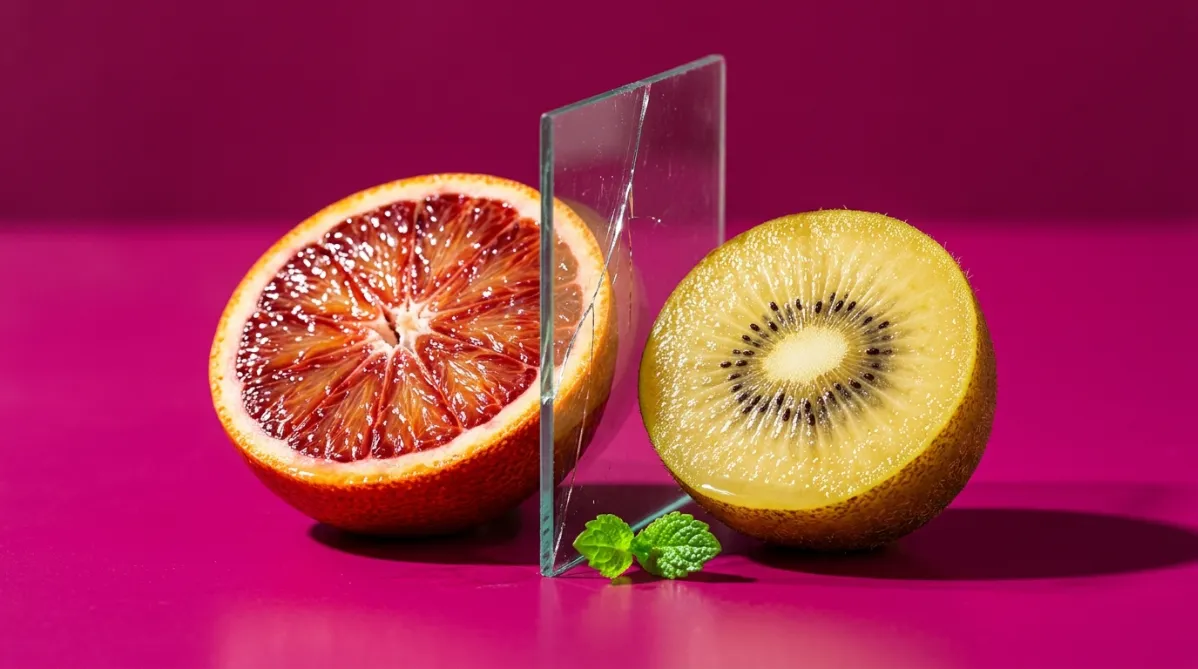
A single halved blood orange and a single halved yellow kiwi-style golden kiwi sit side by side on a saturated magenta seamless backdrop, shot from a low three-quarter angle with shallow depth of field. Between them, a thin, slightly cracked glass pane stands upright, partly dividing the two fruits to suggest "association, not cause." Glistening juice vesicles in the orange flesh catch crisp, directional studio light from the upper left, throwing a sharp, short shadow across the glossy magenta surface. A tiny electric green sprig of a fresh leaf rests at the base of the glass as the only green accent. Colors are juicy, vivid and contrasting: magenta, orange, gold. Mood is curious, clean and quietly skeptical, with a food-as-evidence feel. Photorealistic, tactile textures, no text or labels.
research

Vitamin C và E liên quan đến giảm 18% nguy cơ Alzheimer, nhưng có một điều kiện

BY NOVA CHEN ·

Trong Rotterdam Study với 5.395 người cao tuổi, việc tiêu thụ nhiều vitamin C và vitamin E qua thực phẩm được liên kết với giảm khoảng 18% nguy cơ mắc Alzheimer cho mỗi độ lệch chuẩn. Hiệu ứng này mạnh nhất ở người hút thuốc, khi beta‑carotene và flavonoid cũng xuất hiện. Tuy nhiên, đây là nghiên cứu quan sát về chế độ ăn chứ không phải về viên nén, nên chỉ cho thấy mối tương quan mà không chứng minh nguyên nhân. Một số khoảng tin cậy ở nhóm người hút thuốc vẫn bao phủ giá trị 1.0, do vậy cần xem xét kỹ dữ liệu.

This page is available in